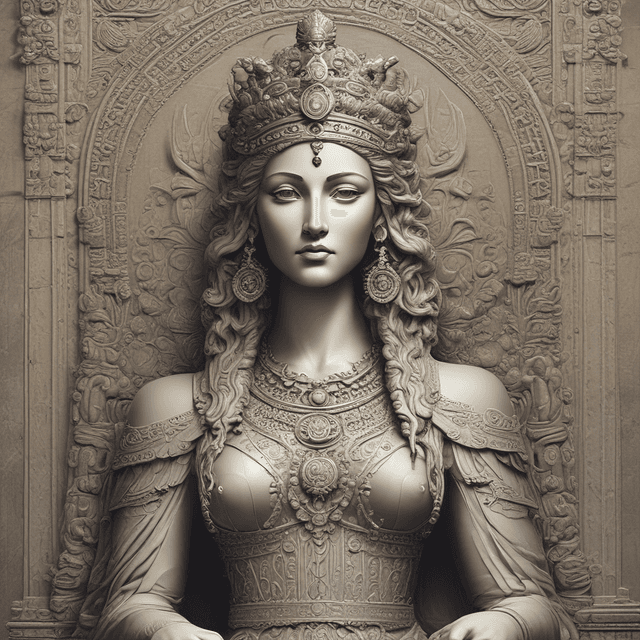
| Focus | Goddess Inanna and her divine powers, conflicts, and influence on the mortal realm |
| Title | The Archaic Sumerian Epic of Inanna |
| Period | Over 1,000 years before the Epic of Gilgamesh |
| Lineage | Precedes and influences later Mesopotamian literary works |
| Significance | Provides unprecedented insight into the origins of Mesopotamian literature and mythology, altering academic understanding of the development of Sumerian religion and culture |
In the summer of 2018, an international team of archaeologists and philologists made a remarkable discovery in the ruins of the ancient Sumerian city of Uruk: a partially intact cuneiform tablet containing the earliest known epic poem from Mesopotamia, predating the famous Epic of Gilgamesh by over 1,000 years. Dubbed the "Lament of Inanna," this newly unearthed text provides an unprecedented glimpse into the foundations of Sumerian literature and mythology.
The tablet was found deeply buried in the ruins of the Temple of Inanna in Uruk, one of the oldest and most important religious centers in ancient Sumer. Remarkably well-preserved, the tablet contained over 600 lines of text written in an early form of the Sumerian language.
Radiocarbon dating and paleographic analysis of the cuneiform script have dated the tablet to around 3200 BCE, making it the oldest substantial literary work yet discovered from ancient Mesopotamia. This places it nearly 14 centuries before the composition of the Epic of Gilgamesh, which had previously been considered the earliest major Sumerian epic.
Unlike the Epic of Gilgamesh, which centers on the heroic deeds of the mortal king Gilgamesh, the "Lament of Inanna" is focused on the exploits and divine powers of the Sumerian goddess Inanna, the Queen of Heaven and Earth.
The narrative begins with Inanna descending from her celestial abode into the underworld realm of her sister, the death goddess Ereshkigal. Defying the laws of the underworld, Inanna boldly confronts Ereshkigal, resulting in a battle of wills and supernatural forces. Other major divine figures that appear include the heroic god Utu, the wise counselor Enki, and the primordial creator god An.
Throughout the epic, Inanna is portrayed as a complex, multifaceted deity - both alluring and terrifying, nurturing and destructive. The text delves deeply into Inanna's divine prerogatives, her cosmic conflicts with rival gods, and her shaping influence over the mortal world of Sumer.
The discovery of the "Lament of Inanna" has significantly expanded scholarly understanding of the origins and evolution of Sumerian religious thought and mythology. As the oldest known Mesopotamian epic, it provides an unparalleled window into the early conceptualization of the divine, the cosmos, and the relationship between the mortal and immortal realms.
Notably, the text challenges traditional gender norms in Mesopotamian literature by having a powerful female deity as the central protagonist, rather than the usual male hero. This suggests a more prominent role for female deities and priestesses in the earliest phases of Sumerian culture.
The "Lament" also reveals a more mystical, esoteric and supernaturally-charged worldview in contrast to the relatively more rationalistic and secular Epic of Gilgamesh. This hints at a religious evolution from an earlier polytheistic, shamanistic tradition to the more organized pantheon and creation myths of later Sumerian civilization.
The discovery of this lost Sumerian epic has fundamentally reshaped academic understanding of the development of Mesopotamian literature and the origins of civilization in the region. Scholars are now reevaluating long-held theories about the lineage and cultural influences behind iconic works like the Epic of Gilgamesh.
The "Lament of Inanna" has also sparked renewed interest in recovering other potentially ancient Mesopotamian texts that could further illuminate this crucial transitional period between prehistory and the recorded history of Sumer, Akkad, Assyria and Babylon. The text's implications continue to be probed and debated by historians, linguists, and religious studies scholars worldwide.
Ultimately, the "Lament of Inanna" stands as a remarkable testament to the richness and complexity of Sumerian civilization, reminding us that the foundations of Mesopotamian culture and literature stretch back much further than previously known.
